
Singapore Travel Guide: Where Futuristic Technology, Nature and Cultures Meet

Singapore is known around the world as the futuristic city where technology and nature come together. Giant Supertrees glowing at night, a rooftop pool above the skyline, an indoor waterfall inside an airport, and green spaces tucked between skyscrapers: it really does feel like a glimpse of the future.
But there is a second side of Singapore that many travelers miss, and it is the one that made me fall for this country. Singapore is a meeting point of cultures. Within a few minutes of walking you can pass a Chinese temple, a Hindu temple, a mosque and a church, often just a few streets away from each other. Different religions, languages, foods and traditions live side by side here, and that is what makes the city so special.
In this guide, I'll share everything you need to know before visiting Singapore, including where to stay, what to eat, how to get around, and the best places to see both sides of the city: the futuristic one and the cultural one.

Everything You Need to Know Before Visiting Singapore
Location
Singapore is a small island city-state in Southeast Asia, just south of Malaysia. It is a country, a city and an island at the same time, which is why it is so easy to explore.
Language
Singapore has four official languages: English, Mandarin, Malay and Tamil. English is the main language of business and daily life, so you will have no trouble getting around, reading signs or ordering food.
Currency & Money
Singapore uses the Singapore Dollar (SGD).
Cash or Card?
Cards and contactless payments are accepted almost everywhere, including many taxis and shops. Cash is still useful at hawker centres and small food stalls, so keep a little with you.
Entry Requirements
Entry rules depend on your passport, so check the official requirements before you book. Most visitors also need to fill in the free SG Arrival Card online before arriving, usually within a few days of your flight.

Choosing the Best Time to Visit Singapore
Singapore is hot and humid all year, with temperatures that barely change between seasons. The real difference is the rain.
Drier Months
February to April is generally the driest and most comfortable stretch, which makes it great for walking around and taking photos.
Rainy Months
November to January is the wetter monsoon season. Rain usually comes in short, heavy showers rather than all-day drizzle, so a small umbrella is all you need. The city is built for this: many streets, malls and MRT stations are connected by covered walkways.
Whenever you go, plan outdoor sights for the morning or evening, and save the museums, malls and food courts for the hottest hours.

How Many Days Do You Need in Singapore?
Four to five days is the sweet spot for a first visit. That gives you time for the Marina Bay area, Gardens by the Bay, the cultural districts and plenty of hawker food without rushing.
If you only have 3 days, focus on Marina Bay, Chinatown, Little India and Kampong Glam. With a week, you can add Sentosa, Pulau Ubin and slower mornings in the Botanic Gardens.
The heat can be tiring, so build in breaks. Most places are air-conditioned, which makes midday rests easy.
Transportation in Singapore
Getting around Singapore is easy, clean and efficient.
MRT (Metro)
The MRT is the fastest way to get around and reaches almost every area on this list. You can tap in and out with a contactless bank card or phone, so you do not need to buy a separate ticket for most trips.
Buses
Buses are cheap and cover everywhere the MRT does not. Google Maps shows routes and timings accurately.
Taxi & Grab
Taxis are affordable compared to most European capitals. Grab, the local ride-hailing app, is widely used and handy after a long day or during a downpour.
Walking
Singapore is very walkable, with shaded paths, covered bridges and underground links. Wear light, breathable clothes and comfortable shoes, and carry water.
Understanding Singapore: Two Sides of One Country
The best way to experience Singapore is to see both of its personalities. They are only a short ride apart.
The Futuristic Side
This is the Singapore you see in photos: the Marina Bay skyline, Gardens by the Bay, Jewel Changi Airport and the green towers of the city center. Architecture, technology and nature are designed together, with plants growing on buildings and parks built into the skyline.
The main areas are:
Marina Bay
Gardens by the Bay
Orchard Road
Sentosa
The Cultural Side
This is the Singapore that made me fall in love with it. The city grew as a trading port, and people from China, India, Malay communities and many other places settled here and brought their faith, food and traditions with them. Each community still has its own district, and they all sit close together.
The main areas are:
Chinatown: Chinese temples, a Buddhist relic temple, traditional shophouses and street food
Little India: colorful Hindu temples, spice shops, jasmine garlands and Indian restaurants
Kampong Glam: the Malay and Arab quarter with a golden-domed mosque, Haji Lane and Arab Street
Joo Chiat & Katong: pastel Peranakan houses and local cafés
Civic District: colonial buildings, churches and cathedrals
What I love most is that these places are not museums. People still pray, cook and celebrate here every day, so the culture feels alive.
Best Places to Visit and Photograph
Gardens by the Bay
The most iconic place in Singapore. The Supertrees are huge vertical gardens that light up at night, and the free evening light show is worth planning your night around. Inside the park, the Cloud Forest and Flower Dome are two giant glass conservatories that feel like another planet. Walk the OCBC Skyway between the Supertrees for a view over the whole garden.


Marina Bay Sands
The building that defines the skyline. Even if you do not stay here, you can visit the observation deck for panoramic views of the bay and the city.
Merlion Park
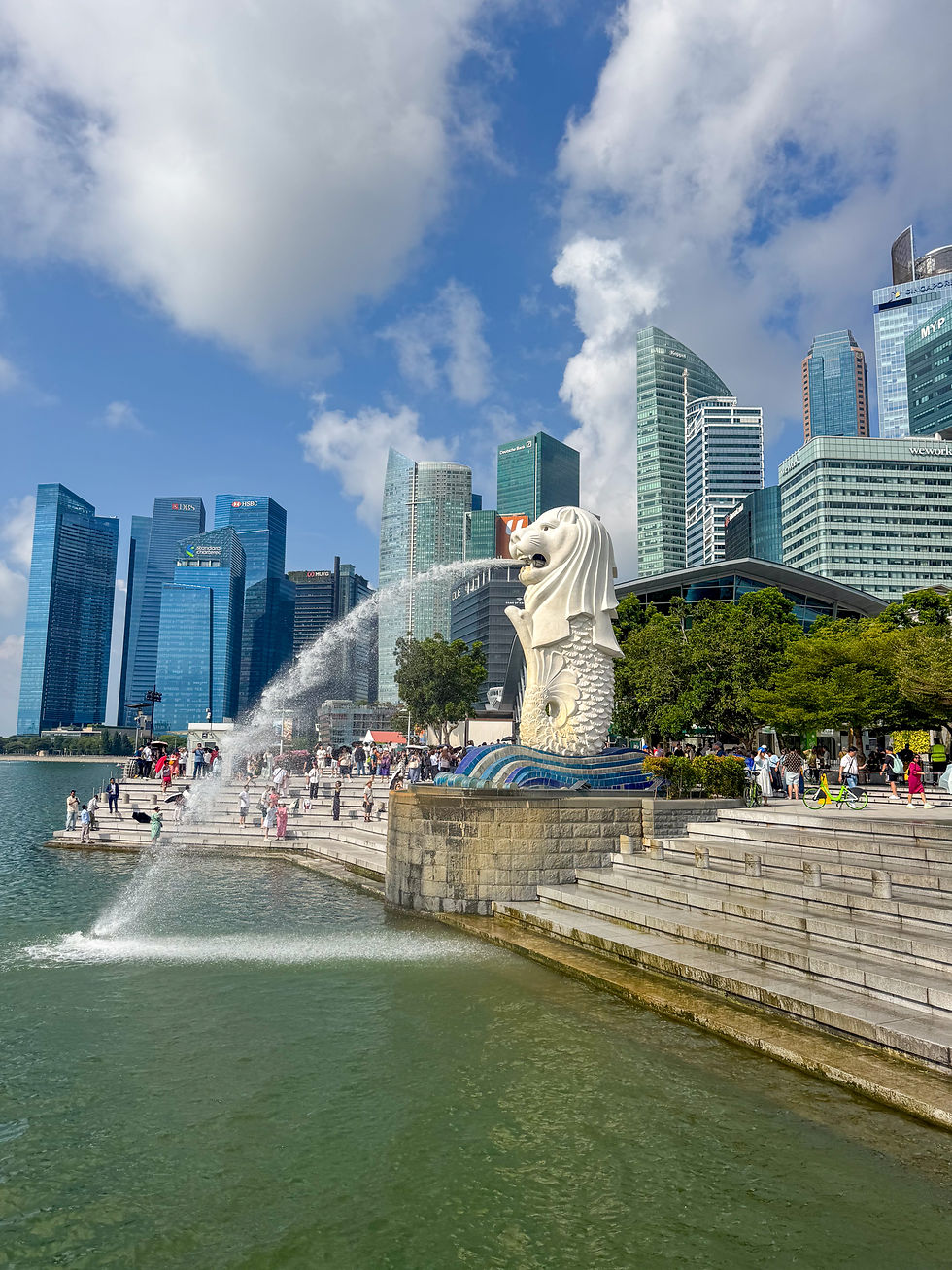
The Merlion, a creature with a lion's head and a fish's body, is the symbol of Singapore. The name Singapore even means "Lion City". The statue spouts water into the bay, with Marina Bay Sands right behind it, which makes it a must-have photo. Go early in the morning or at blue hour for fewer crowds, and try shooting from a low angle so the water and the skyline both fit in the frame.

Jewel Changi Airport
Even if you are only passing through, stop at Jewel. The Rain Vortex, a huge indoor waterfall surrounded by a forest, is one of the most surreal places in the city.
National Orchid Garden
Located inside the UNESCO-listed Singapore Botanic Gardens, this garden is home to thousands of orchids in every color you can imagine. Singapore's national flower is the orchid, and walking through the colorful flower arches and misty cool house is a calm, beautiful way to see the greener side of the city. Visit in the morning, when it is cooler and quieter. Entry to this garden is ticketed, unlike the rest of the Botanic Gardens.

For more photo spots check out the map:
Final Thoughts on Singapore
Singapore surprised me in the best way. Yes, it has the futuristic skyline, the glowing Supertrees and the perfectly planned green spaces. But what stays with me is how many cultures share this tiny island, and how naturally they live together. A temple, a mosque and a church can sit a few streets apart, and all of them are part of the same everyday life.
If it's your first time visiting, I recommend spending at least 4 days: enjoy the futuristic side at Marina Bay and Gardens by the Bay, then spend real time in Chinatown, Little India and Kampong Glam. Eat at hawker centres, step outside the touristy spots and talk to the people there. That is when Singapore really opens up.
And now, it's time to get excited for your Singapore trip! For more worldwide travel guides, tips and tricks, finds and prints, don't forget to follow my journey on Instagram!
Love,
Melis Andreea


